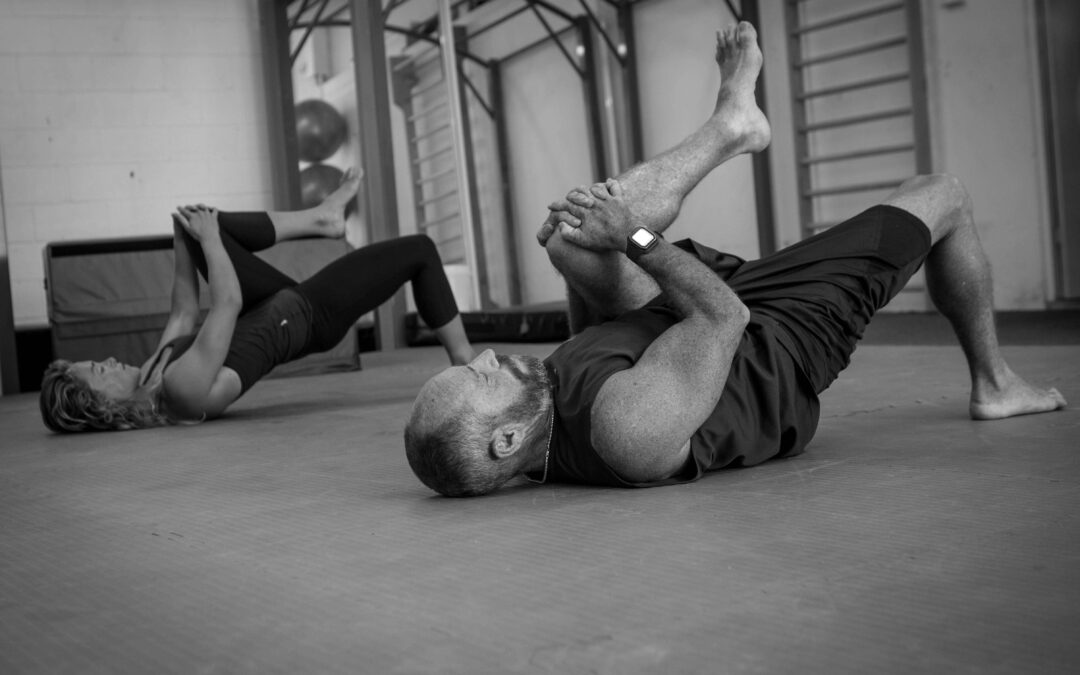
If you’ve spent time exploring mobility training online, you’ve probably come across both Kinstretch and PNF stretching. At first glance, they can seem very similar — both involve deep stretching, muscular contractions and improving range of motion.

But while they share some overlap, the goal behind each method is actually quite different.

What Is PNF Stretching?

PNF (Proprioceptive Neuromuscular Facilitation) stretching is an advanced flexibility technique originally developed in rehabilitation settings. It’s best known for the classic “contract-relax” method.

Typically, a muscle is placed into a stretch, then contracted isometrically for several seconds before relaxing deeper into the stretch. This is often performed with a partner, therapist or strap.

The primary goal of PNF stretching is to:

  • increase passive flexibility,
  • reduce muscular guarding,
  • improve stretch tolerance,
  • and temporarily increase range of motion.

In simple terms, PNF helps you move further into a position.

What Is Kinstretch?

Kinstretch takes a different approach. Rather than focusing mainly on passive flexibility, it emphasises active mobility — the ability to control and produce force throughout a joint’s available range of motion.

Created from the Functional Range Conditioning (FRC) system developed by Andreo Spina, Kinstretch combines mobility training with end-range strength work.

The central idea is simple:

Flexibility becomes more useful, durable and transferable when the body can actively control it.

Instead of just stretching into deeper positions, Kinstretch aims to help you own those positions.
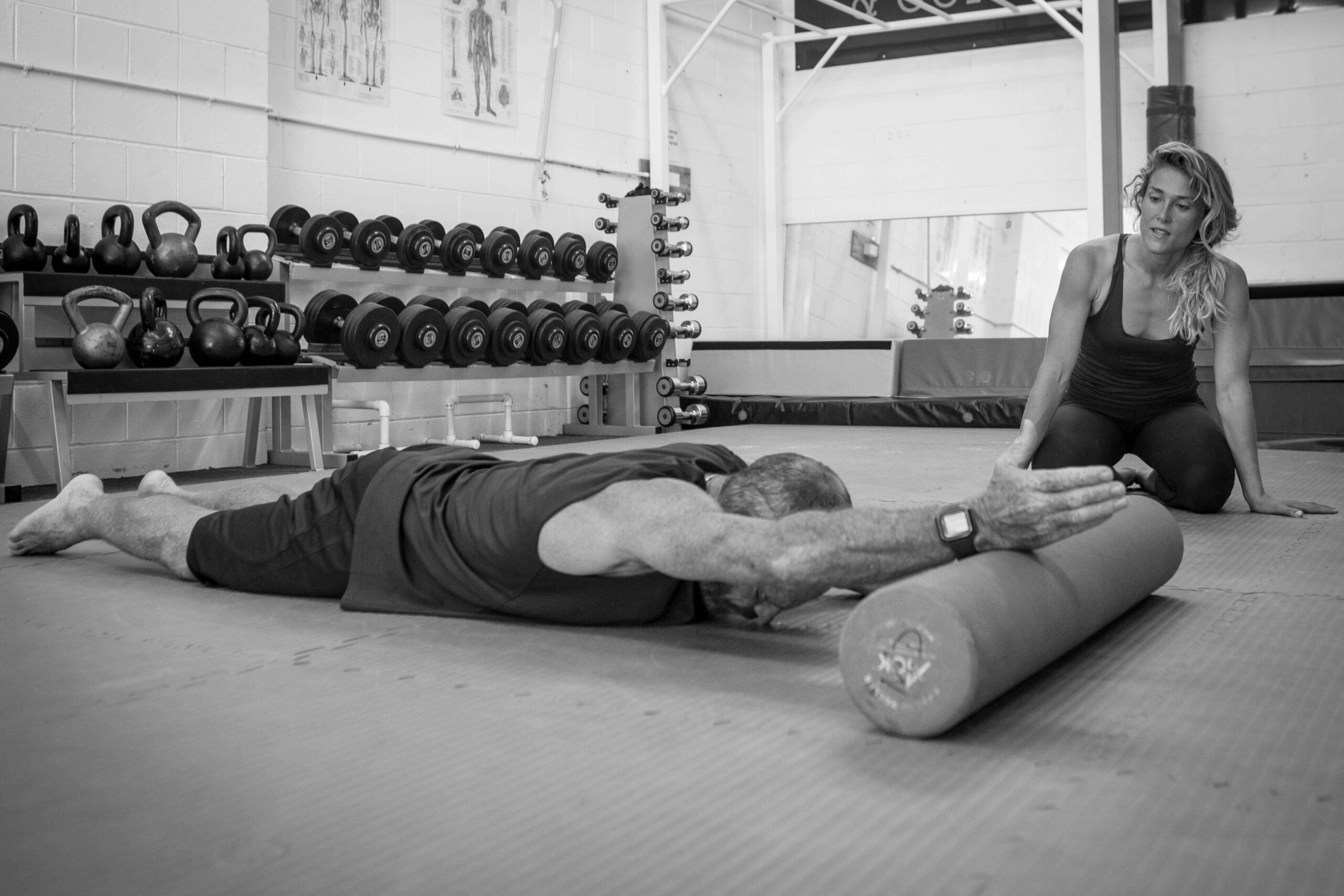
sydneystrengthconditioning michelledrielsma exercisephysiologistsydneynorthern beaches tomcarroll 1

The Key Difference: Passive Flexibility vs Active Mobility

This is where the biggest distinction lies.

PNF stretching often improves the ability to access a range of motion passively — meaning an external force (gravity, a partner or a strap) helps move you there.

Kinstretch focuses more heavily on:

  • active end-range strength,
  • joint-specific control,
  • force production at long muscle lengths,
  • and improving usable mobility.

Think of it this way:

  • PNF stretching may help you get into the splits.
  • Kinstretch aims to help you actively control and generate force in the splits.

That difference matters for athletic performance, injury resilience and long-term mobility.

What Are PAILs and RAILs?

One of the hallmark features of Kinstretch is the use of PAILs and RAILs.

PAILs (Progressive Angular Isometric Loading)

This involves contracting the tissues being stretched — similar to the contraction phase seen in PNF stretching.

RAILs (Regressive Angular Isometric Loading)

This is where Kinstretch begins to separate itself more clearly from traditional stretching methods.

RAILs involve actively contracting the opposing muscles to pull yourself deeper into the range while simultaneously building strength and control there.

That second component — developing active strength at end-range — is one of the major defining features of Kinstretch.

Why End-Range Strength Matters

Developing strength and control in stretched positions may help the nervous system become more comfortable and capable at those ranges. Over time, this can reduce protective muscular tension and improve usable range of motion.

Rather than relying solely on passive stretching, end-range training aims to build the capacity to:

  • actively control mobility,
  • stabilise joints at extreme ranges,
  • and produce force in positions that previously felt weak or inaccessible.

Dancers and gymnasts are classic examples of this principle in action. Their flexibility is not just passive — it is supported by tremendous strength and control through extreme ranges of motion.

Kinstretch Is More Than Stretching

Another major difference is that Kinstretch is not limited to one technique.

Classes and programs may also include:

  • CARs (Controlled Articular Rotations),
  • end-range isometrics,
  • lift-offs,
  • hovers,
  • internal and external rotation drills,
  • loaded mobility work,
  • and bodyweight strength exercises performed at long muscle lengths.

The goal is not simply to stretch muscles, but to improve overall joint function, mobility and movement capacity.

Does Kinstretch “Expand the Joint Capsule”?

Some mobility circles make claims about dramatically changing joint structures or “expanding the joint capsule.” At present, strong evidence for major structural tissue changes in healthy populations is limited.

The most evidence-supported explanations for mobility improvements are likely:

  • improved stretch tolerance,
  • increased neuromuscular control,
  • reduced protective co-contraction,
  • and strength adaptations at longer muscle lengths.

In other words, many mobility gains probably come from the nervous system becoming more confident and coordinated in those positions — not from radically altering anatomy.

So Which Is Better?

Neither system is necessarily “better” — they simply have different applications.

PNF Stretching May Be Better For:

  • rapid flexibility improvements,
  • rehabilitation settings,
  • improving passive range of motion,
  • and reducing muscular tension.

Kinstretch May Be Better For:

  • long-term mobility development,
  • joint control,
  • athletic performance,
  • active flexibility,
  • and improving strength at end-range.

For many people, the two methods can actually complement each other extremely well.

Final Thoughts

Kinstretch and PNF stretching both aim to improve range of motion, but they approach mobility from different angles.

PNF primarily helps the body relax deeper into a stretch. Kinstretch focuses more on strengthening and controlling those new ranges so they become more usable in real movement.

Ultimately, mobility is not just about how far you can move — it is about how well you can control that movement.