
Strong, mobile toes—especially the big toe—play a crucial role in strength and balance, gait efficiency, injury prevention, and overall foot health. Whether you’re a runner, an older adult looking to reduce the risk of falls, or someone dealing with discomfort, stiffness, or instability, improving your toe strength can transform the way you move.
This article explains why toe strength matters, how toe dysfunction develops, what footwear does to the foot, and the best strengthening exercises to build resilient, capable feet.
1. Why Toe Strength and Mobility Matter
The toes guide your stability with every step. Your big toe provides up to 80% of your push-off force during the gait cycle, helping you walk or run efficiently. Strong toe muscles help you stay in an upright position, stabilise the ankle, support the arch, and maintain healthy posture through the lower limb.
When the toes weaken—whether through modern footwear, inactivity, or past injuries—the foot muscles, tendons and ligaments no longer stabilise the foot effectively. This can contribute to instability, altered gait, and increased load on the knee, hip, and even the lower back.
2. How Poor Footwear Shapes (and Damages) the Foot
Many foot problems stem from shoes, not the foot itself.
Narrow Toe Boxes
Most fashion shoes, ballet shoes, high heels, rock-climbing shoes and even many modern “athletic” shoes compress the toes tightly together. Over time this creates a cascade of imbalances:
-
The big toe is pushed toward the 2nd–5th toes.
-
The medial foot muscles (inside edge) become stretched and weakened.
-
The arch can collapse or lose strength because the toes cannot spread and stabilise the foot.
These imbalances set the stage for dysfunction, weakness, and joint stress.
How Bunions Develop
A bunion (hallux valgus) forms when the big toe drifts inward while the first metatarsal bone drifts outward. Narrow shoes accelerate this by forcing the toe into valgus for hours every day.
Over years, the surrounding ligaments, joint capsule and tendon pathways remodel, making the deformity progressively harder to reverse.
Toe Stiffness and Arthritic Changes
A stiff big toe (hallux rigidus) often develops from:
-
Repetitive impact
-
Prior sprains
-
Poor foot mechanics
-
Weak toe flexors
-
Constrictive footwear
As the big toe stiffens, the joint can develop arthritic changes. Once painful or limited in flexion and extension, people naturally avoid putting weight through it—leading to a cascade of gait compensations.
3. How Altered Gait Develops From Toe Weakness
When the big toe is painful, stiff, or weak, the body avoids using it. This changes the way you walk:
Compensation Patterns Include:
-
Rolling onto the outside of the foot to avoid toe push-off
-
Reduced ability to lift the big toe to clear the ground
-
Increased workload through the ankle, knee, and hip
-
Shortened stride
-
Excessive pressure on the lateral toes
Over time, these compensations can lead to Achilles irritation, shin splints, tendinitis, plantar fasciitis, and general musculoskeletal discomfort.
4. Toe Weakness and Recurring Ankle Sprains
An often-overlooked cause of chronic ankle sprains is weakness in the muscles on the lateral side of the foot coupled with inadequate big-toe pressure into the ground.
When the big toe can’t anchor the foot during stance:
-
The foot becomes unstable.
-
The ankle rolls outward more easily.
-
Lateral ligaments undergo repeated strain.
-
The lower limb loses its natural stabilising sequence.
Improving big toe strength can dramatically reduce ankle sprain recurrence because the toe acts as a stabilising lever during single-leg balance and push-off.
5. How to Assess Your Toe Strength and Function
Here are simple functional tests that help you evaluate toe strength:
1. Toe Strength Dynamometer Test
You should be able to press your big toe into a dynamometer with force equal to 10% of your bodyweight.
For example, a 70 kg person should produce ~7 kg of big toe pressure.
This is a strong indicator of healthy toe flexor strength.
You should be able to press your 2-5th toes into a dynamometer with force equal to 7% of your bodyweight.
2. Anterior Fall Envelope Test
Stand facing a wall and lean forward. Ideally, you should be able to stand with your belly button at least 4.5 inches (11.4 cm) from the wall without falling or taking a step.
This test reflects not only toe strength but also how well the toes stabilise your center of mass.
3. Seated Calf Raise Strength (Soleus Focus)
The soleus is essential for balance and gait propulsion.
A good functional benchmark is:
-
Seated calf raise = 1.5× bodyweight
For a 70 kg person, that means a 105 kg seated raise.
Toe strength and calf strength are closely linked: without strong toe flexors, the calf cannot transfer force efficiently into the ground.
6. How Barefoot Habits and Toe Spacers Help
Toe Spacers
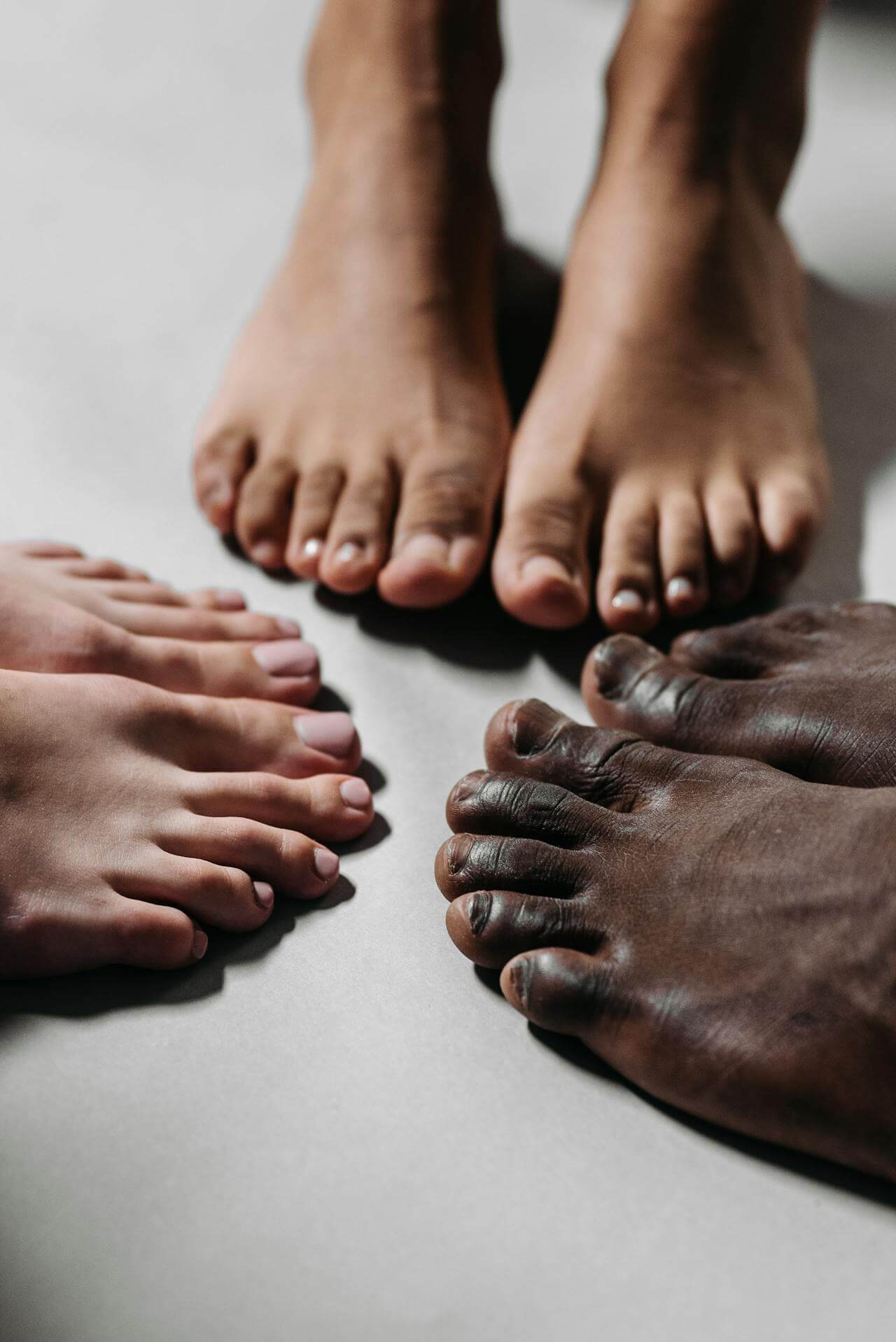
Toe spacers are a simple tool that help to:
-
Realign the toes temporarily to enable strengthening from an ideal position.
-
Strengthen the small foot muscles.
-
Improve the function of the plantar fascia.
-
Reduce bunion progression while wearing them.
They’re not a magic solution, but they improve the foot’s natural resting position.
Barefoot Walking & Supportive Minimalist Shoes
The optimal footwear characteristics for long-term foot health are:
-
Wide toe box (so the toes can spread naturally)
-
Zero heel-to-toe drop (so the foot stays in a neutral alignment)
-
Flexible sole
-
No arch-squeeze
Walking barefoot or in barefoot-style footwear helps awaken dormant foot muscles and restores natural mobility, balance, and sensory feedback. Before you start, read this article for recommended footwear since some barefoot-style footwear can actually cause foot problems.
7. Simple Toe Exercises to Improve Mobility and Strength
Below are exercises to help strengthen the toes and improve big toe mobility and foot control. These are ideal for preventing dysfunction and restoring healthy foot mechanics.
1. Toe Yoga – Lift & Press
-
Lift only the big toe while keeping the lesser toes on the ground.
-
Then press the big toe down while lifting the others.
This trains coordination and strengthens both medial and lateral foot muscles.
2. Toe Scrunches (Towel Scrunch)
-
Place a towel under your foot.
-
Use your toes to scrunch the towel toward you.
This strengthens the intrinsic foot muscles and improves arch control.
3. Big Toe Stretch, Strengthen & Mobilisation
Gently stretch the big toe into flexion and extension. This maintains range of motion and reduces stiffness that leads to altered gait.
You can do several isometric contractions from a neutral position as well as end-range positions.
Dynamic strengthening with bands, calf raises double and single leg – bent and straight leg.
8. When to Seek Professional Help
A doctor or physical therapist (or an exercise physiologist) should assess your feet if you experience:
-
Consistent pain
-
Arthritic stiffness
-
Recurring sprains
-
Inability to push off the big toe
-
Progressive bunion deformity
Professional assessment can identify deeper musculoskeletal dysfunction and provide targeted treatment or strength training programs.
Key Takeaways
-
Most people have weaker toes than they realise—modern footwear is a major cause.
-
A strong big toe is crucial for proper stance, gait, balance, and foot stability.
-
Narrow toe boxes contribute to bunions, toe crowding, and muscular imbalance.
-
Big toe stiffness leads to altered gait and overloads other joints.
-
Toe strength helps prevent ankle sprains and improves lower-limb control.
-
Aim for big toe pressure ~10% of your bodyweight.
-
Toe spacers, barefoot walking, and supportive wide shoes help restore natural function.
-
Strengthening the toes improves posture, gait efficiency, and long-term foot health.