
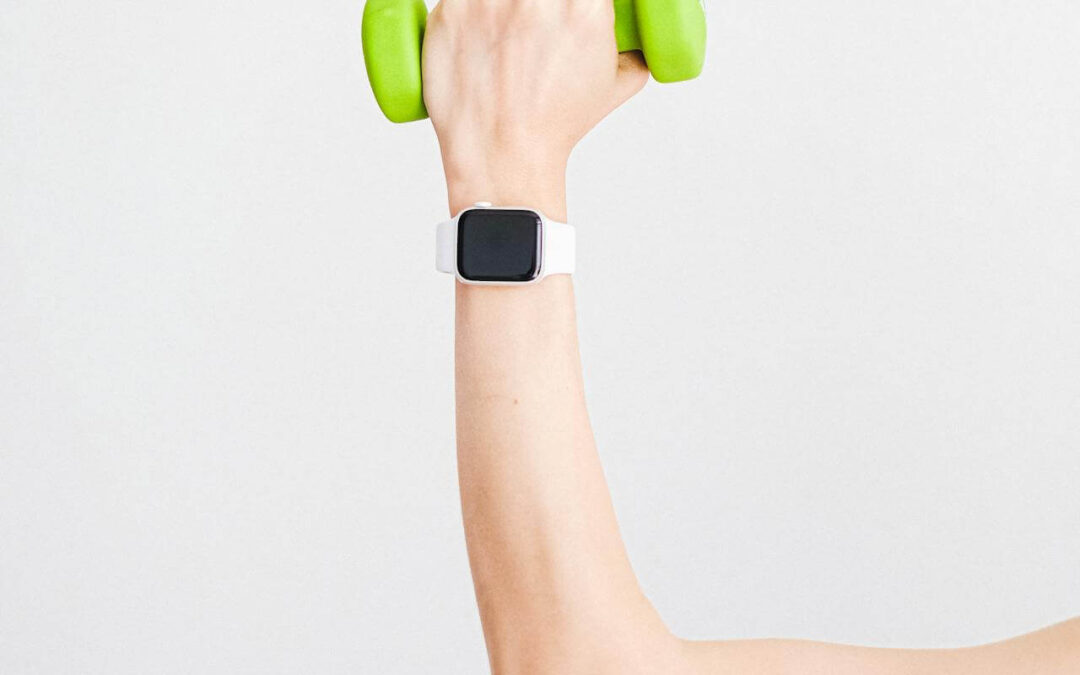
Fitness trackers have become as common as smartphones—counting our steps, estimating heart rate, tracking sleep, and even guessing how stressed we are. They’re convenient, relatively affordable, and easy to wear throughout the day. But one question keeps coming up:
How accurate are wrist-worn fitness trackers, really?
The short answer:
They’re great as comparison tools—but they’re not perfect measurements of your physiology.
Here’s why.
Why Wrist-Worn Trackers Are Helpful — But Not Perfect
Wrist devices use something called photoplethysmography (PPG). This is a fancy term for shining light into your skin and measuring tiny changes in blood volume as your heart beats. It’s a clever and non-invasive method, but it comes with limitations.
1. Movement Makes Wrist Readings Less Accurate
During exercise, your wrist moves a lot—especially during running, strength training, or sports.
Movement disrupts the optical signal, making it harder for the sensor to distinguish blood flow from noise.
Scientific example:
A widely cited 2016 study by Cleveland Clinic researchers published in JAMA Cardiology comparing wrist-worn devices to ECG and chest-strap monitors — and a 2017 study published in the Journal of Physical Activity Research, found that wrist-worn HR monitors can be off by up to 20% during vigorous exercise, especially when arm movements are involved. We’ll have a closer look into these studies below.
JAMA Cardiology (Cleveland Clinic, 2016) Study
-
They compared several wrist-worn HR monitors to a continuous ECG (the gold standard).
-
In their Bland-Altman analysis (a method to compare two measurement techniques), for wrist-worn devices:
-
The Apple Watch’s differences (compared to ECG) had a 95% limits of agreement of roughly –27 to +29 beats per minute (bpm).
-
For Fitbit Charge HR, the 95% limits of agreement were even wider: ~ –34 to +39 bpm.
-
-
In practical terms: during exercise, wrist-worn devices could both under- and overestimate heart rate by a substantial margin depending on the activity and device.
-
They conclude that none of the wrist devices matched the accuracy of a chest strap monitor.
If we take, for example, a true HR of 170 bpm (during vigorous exercise) and a device might read ± 30 bpm off, that’s potentially +/- ~18% error in that case (30 ÷ 170 ≈ 0.176).
Journal of Physical Activity Research (Hough, Glaister & Pledger, 2017)
-
In this study, 18 adults did exercise on a cycle ergometer, with wrist devices + a chest-worn Polar HR monitor + ECG.
-
They reported the number of instances where the wrist devices’ HR differed from ECG by ≥ 5 beats per minute (bpm):
-
Apple Watch: 2/90 readings (2.2%)
-
Mio Fuse: 4/90 (4.4%)
-
TomTom: 10/90 (11.1%)
-
Fitbit: 19/90 (21.1%).
-
-
Their conclusion: wrist-worn monitors give an “acceptable level of accuracy” in a controlled cardio exercise (cycling), but chest strap monitors are more accurate, especially when precision is important.
Note: this study doesn’t always report massive bpm errors like the Cleveland Clinic paper. Rather, their “≥ 5 bpm error” instances show how often wrist devices deviate from ECG by that margin under their test conditions.

2. Skin, Hair, and Position Matter
PPG accuracy varies with:
-
Skin tone
-
Tattoo pigment
-
Temperature
-
Sweat
-
The tightness and position of the device on the wrist
These aren’t “flaws” of the user—they’re just realities in how optical sensors work.
3. Heart Rate Variability (HRV) Is Especially Sensitive to Error
HRV reflects tiny variations between heartbeats. On a chest strap, these intervals are measured electrically (ECG).
On a wrist tracker, the intervals must be estimated from optical signals.
As a result:
-
Wrist HRV = fine for trends but not reliable for precise metrics.
-
Chest strap HRV = accurate enough for clinical and athletic analysis.
Why Chest Straps Are More Accurate
Chest straps use electrical sensors, similar to a single-lead ECG. They measure the electrical impulse directly from the heart, not light bouncing off the skin.
That means:
✔ More accurate heart rate
✔ Better during high-intensity or intermittent training
✔ Reliable for HRV
✔ Less affected by movement
This is why chest straps are often used in:
-
Exercise physiology labs
-
Cardiac rehab
-
Sports science research
-
Competitive endurance training
If you’ve ever wondered why your wrist tracker says your heart rate is 150 but a chest strap says 165, the chest strap is the correct one—especially during exercise.
But Wrist Trackers Are Still Extremely Useful
Even if they aren’t perfect, wrist trackers shine in several important ways:
1. They’re excellent for relative comparisons
The absolute number might be off, but trends are usually accurate:
-
Your average heart rate this week vs. last week
-
How your sleep duration changes over time
-
Your typical daily step count
The value is in the pattern, not the exact number.
2. They encourage behaviour change
Research shows that simply tracking steps can increase daily movement by up to 1,800 steps/day.
Awareness changes behaviour, even if the device isn’t flawless.
3. They’re great for resting measures
When you’re still, wrist-based PPG accuracy improves.
So for:
-
Resting heart rate
-
Sleep timing
-
Low-intensity movement
…you can expect reasonably solid data.
How to Get the Most Out of Your Wrist Tracker
Here are practical, science-backed ways to improve accuracy and extract meaningful insights:
1. Look at trends, not single numbers
Use the device to track progress over time.
If your resting heart rate has dropped 6 bpm over 8 weeks, that’s meaningful—even if the exact number may be slightly off.
2. Wear it snugly and consistently on the same wrist
Not tight enough to cut circulation, but secure enough that it doesn’t bounce around.
3. For high-intensity training, pair it with a chest strap
Most modern trackers accept a paired chest strap signal.
This gives you:
-
Accurate heart rate
-
Accurate HRV
-
Better zone training
It’s the best of both worlds.
4. Sleep and stress data are estimates, not diagnoses
Your tracker can suggest patterns—like poor sleep quality after late caffeine—but it cannot medically diagnose anything.
Use it as a guide, not a verdict.
5. Use step counts and activity minutes as big-picture tools
These are reliable enough to support habits like walking more or sitting less.
So, Are Wrist Trackers Worth It?
Absolutely—as long as you know what they’re good and not-so-good at.
-
Great for: trends, behaviour change, daily movement, resting HR, casual fitness tracking
-
Not ideal for: high-intensity accuracy, HRV precision, clinical measurements
Wrist-worn HR monitors can be significantly off compared to ECG or chest strap, especially during more intense or erratic movement. For someone who just wants a rough gauge (e.g., “how hard am I working, generally?”), wrist devices may be “good enough,” particularly for lower intensity exercise or day-to-day tracking. But for high-intensity workouts, clinical monitoring, or when you need precise HR data (e.g. prescribing exercise by heart rate zones or monitoring HR variability), a chest strap or ECG-based method is much more reliable.
If you want lab-quality data, a chest strap or ECG-based tool is necessary.
If you want real-world, everyday insight, your wrist tracker is more than enough—just use it wisely.
Got any questions? Reach me here!