Michelle’s Coaching Philosophy
My coaching methods have evolved over the years through personal training experience, working with a wide range of clients, and continually refining my understanding of strength and conditioning. I place a strong emphasis on mastering fundamental lifts such as squats, deadlifts, presses, pulls, and rows with sound technique, as I believe these movements form the foundation of effective strength development. However, every program is tailored to the individual’s goals, movement capabilities, injury history, and biomechanical considerations.
All clients begin with a movement and range of motion assessment. Where restrictions or compensations are identified, improving mobility, stability, and movement quality becomes a key focus of the program. Main lifts are supported by carefully selected assistance exercises and exercise variations are rotated as appropriate to address weaknesses and maintain progress.
When working with athletes, my primary objective is often not to mimic their sport in the gym, but rather to address the movement imbalances and physical limitations that can develop from years of repetitive and asymmetrical loading. For example, a swimmer spends countless hours practising sport-specific movements in the pool and does not need more of the same on a swimming ergometer. Instead, I focus on helping joints move more independently and efficiently, which can improve overall movement quality, support performance, and reduce injury risk. In many ways, the better we become at a sport, the further we can drift from balanced, general human movement.
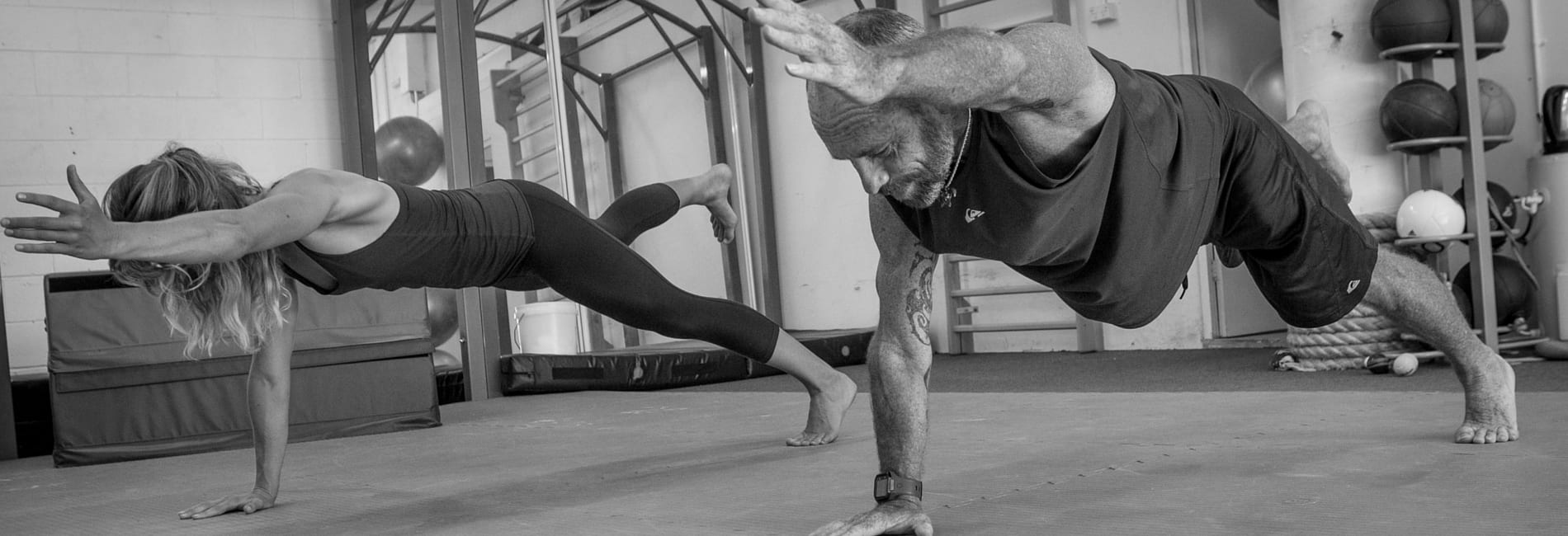
Once an athlete demonstrates good movement quality and adequate ranges of motion, exercises are selected to enhance the key physical demands of their sport and improve the transfer of strength and power. This may include single-arm and single-leg exercises, rotational movements, cable and dumbbell work, resistance bands, bodyweight exercises, and other sport-specific variations. Plyometrics, sprinting, medicine ball drills, kettlebell exercises, and jumping activities may also be incorporated where appropriate, while avoiding an excessive focus on speed and power development at the expense of other physical qualities.
I believe effective training programs should expose clients to a range of intensities and repetition schemes, including heavy, moderate, and lighter loading. Progress is driven through the thoughtful manipulation of variables such as volume, intensity, frequency, exercise selection, tempo, rest periods, and movement angles. Cardiovascular training should also incorporate a variety of movement modalities where possible.
Most importantly, training should be enjoyable and sustainable. Consistency is one of the greatest predictors of long-term success, so I encourage clients to find forms of training they genuinely enjoy. I teach what I believe is most effective for each individual at a given time while remaining committed to ongoing learning and professional development.